Case Study: Industrial Monitoring with IIoT, MQTT, and OEE
February 22, 2026
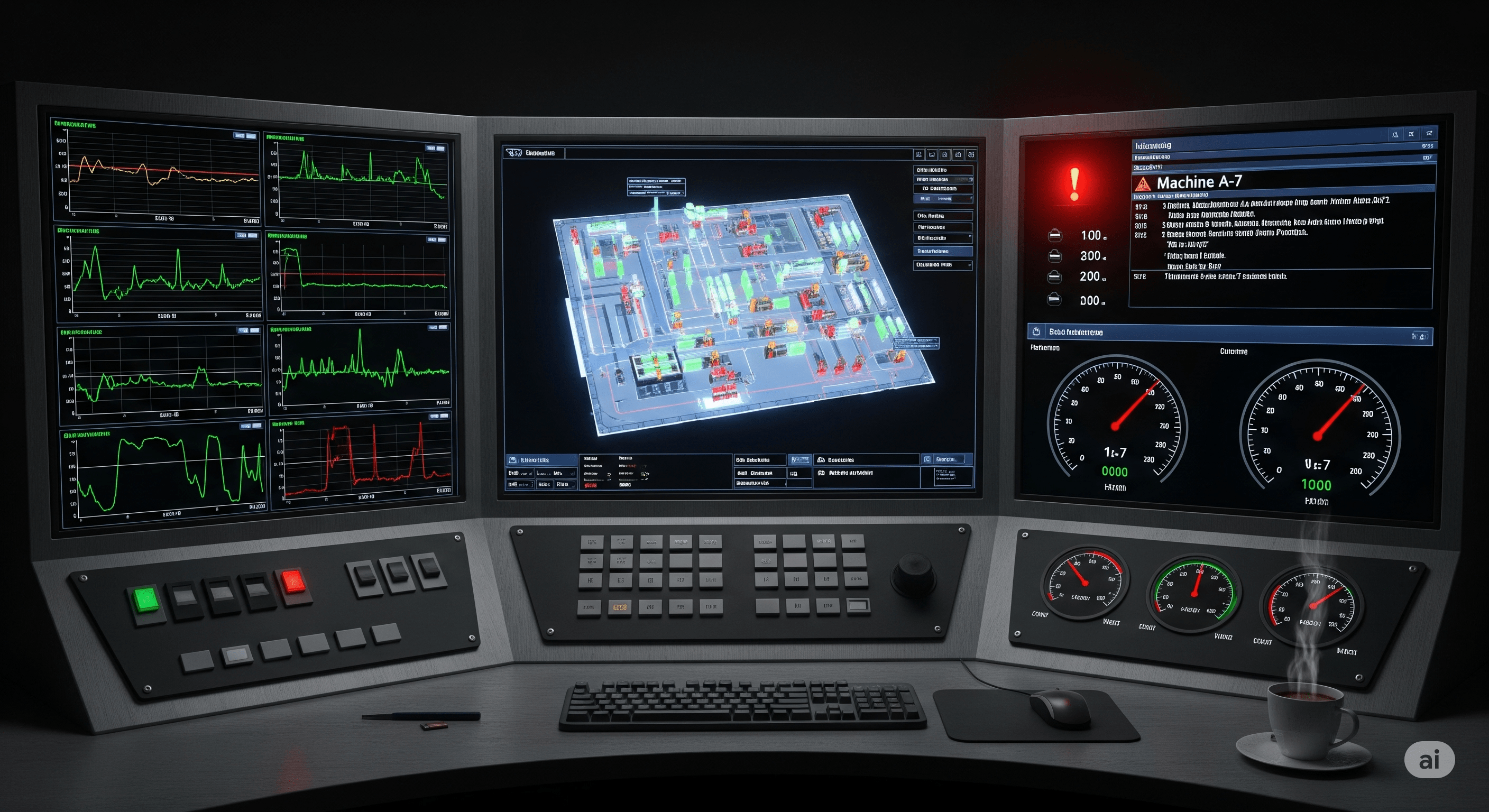
Industrial monitoring has evolved dramatically in the last decade. Traditional SCADA systems, wired PLC networks, and legacy monitoring stacks are being replaced by lightweight, scalable IoT infrastructures built on MQTT and BLE. This article is a detailed cluster page supporting our main MQTT Dashboard guide.
In this case study, we explore how a mid-sized manufacturing company transformed its operational visibility using a hybrid BLE sensor + MQTT broker + cloud dashboard architecture, powered by MQTTfy Dashboard.
What This Case Study Covers
- Business problem
- Technical architecture
- Deployment challenges
- Security strategy
- Data modeling
- Real-time visualization
- Alert automation
- ROI metrics
- Scalability blueprint
- Lessons learned
The Industrial Problem
Company Profile
- Industry: Steel Component Manufacturing
- Machines: 140 CNC machines
- Location: Tier-2 industrial zone
- Workforce: 220 employees
- Operational Hours: 24/7
Key Challenges
- No real-time machine health visibility
- Reactive maintenance model
- Unexpected downtime costing ₹3–5 lakhs/month
- No centralized temperature & vibration monitoring
- Manual data logging in Excel
- Zero predictive insights
Existing System Limitations
- Manual readings
- PLC logs stored locally
- No cloud aggregation
- No remote monitoring
Required Capabilities
- Real-time alerts
- Historical analytics
- Mobile dashboard
- Low-cost wireless sensor layer
- Scalable architecture
Why MQTT + BLE Was Chosen
Why Not Traditional SCADA?
- Expensive licensing
- Vendor lock-in
- Hard to scale
- Complex hardware
Why MQTT?
MQTT is a lightweight publish-subscribe messaging protocol designed for unreliable networks and low-bandwidth devices.
Advantages
- Low overhead
- Event-driven
- Real-time communication
- Supports QoS levels
- Ideal for IoT environments
Why BLE?
Bluetooth Low Energy provides:
- Low power consumption
- Battery-powered sensors
- Low-cost deployment
- No heavy wiring
- Easy retrofitting in existing factories
Final Data Flow Architecture
BLE Sensors → Gateway → MQTT Broker → MQTTfy Dashboard
Architecture Overview
Layer 1 – Edge Sensors
Installed on:
- Spindle motors
- Bearing housings
- Compressor units
- Control panels
Sensors Included:
- Temperature
- Vibration
- Humidity
- Current consumption (a key part of energy management)
BLE devices broadcast telemetry every 10 seconds.
Layer 2 – BLE Gateway
Industrial Raspberry Pi–based gateways, similar to those in our camera streaming tutorial, were used to:
- Scan BLE advertisements
- Parse sensor payload
- Convert data into structured JSON
- Publish to MQTT Broker
Topic Structure Used
factory1/line3/cnc12/temperature
factory1/line3/cnc12/vibration
Layer 3 – MQTT Broker
Managed MQTT broker cluster configured with:
- TLS encryption
- Device authentication
- Topic-based ACL control
- Persistent sessions
Layer 4 – MQTTfy Dashboard
All telemetry visualized using our MQTTfy Dashboard with:
- Real-time graphs
- Machine status indicators
- Historical trend comparison
- Alert triggers
- Downtime heatmaps
The dashboard serves as the main visualization layer.
Deployment Strategy
Phase 1 – Pilot (15 Machines)
- Goals:
- Validate BLE signal stability
- Test data loss rate
- Validate alert latency
- Check battery life
- Results:
- 99.2% data reliability
- <1.5 seconds average alert delay
- 8-month projected battery life
Phase 2 – Full Rollout
- 140 machines
- 12 gateways
- 560 sensors
- 1 centralized MQTT cluster
Deployment completed in 28 days.
Data Modeling Strategy
One of the biggest mistakes in industrial IoT is poor topic hierarchy.
Structured MQTT Topic Format
company/site/zone/machine/sensor
Example
steelco/site1/zoneB/cnc14/vibration
Benefits
- Scalable filtering
- Easy wildcard subscriptions
- Clean multi-tenant expansion
- Simplified dashboard mapping
Payload Example
{
  "timestamp": 1707001122,
  "value": 48.3,
  "unit": "celsius",
  "battery": 87
}
Alerting & Automation
Threshold-Based Alerts
- Trigger Conditions:
- Temperature > 75°C
- Vibration > 20 mm/s
- Current spike > 15%
- Trigger Actions:
- Email notifications
- WhatsApp alerts
- Dashboard notifications
- Machine shutdown (future integration)
Average detection time: 1.2 seconds
Security Implementation
Industrial systems are highly sensitive.
| Security Layer | Implementation |
|---|---|
| Transport Security | TLS encryption, Broker certificate validation |
| Authentication | Unique client ID per gateway, Rotating authentication tokens |
| Access Control | Topic-level ACL rules, Read-only dashboards for supervisors |
| Network Segmentation | VLAN separation, Firewall rules for broker |
No security breaches recorded post-deployment.
Downtime Reduction Results
| Metric | Before Implementation | After 6 Months |
|---|---|---|
| Unexpected breakdowns/month | 11 | 3 |
| Monthly downtime losses | ₹4.2L | ₹1.1L |
ROI
- System Cost: ₹28L
- Average Monthly Savings: ₹3L
- ROI Achieved In: 9.3 months
Predictive Maintenance Model
Using historical vibration trends and effective data visualization, we achieved predictive maintenance, a technique also vital in our fleet management case study.
- Bearing failure predicted 9 days early
- Compressor overheating predicted 5 days early
Techniques Used
- Rolling average anomaly detection
- Baseline deviation alerts
- Historical trend visualization
Future Plan: ML-based predictive modeling integration.
Dashboard Capabilities (MQTTfy Integration)
Following the principles of building an effective IoT dashboard, we used MQTTfy Dashboard for:
- Live sensor tiles
- Multi-line graphs
- Time-series export
- Machine grouping
- Mobile-responsive interface
- Role-based access
- Historical comparison
- CSV export
- Industrial dark theme
Dashboard Functions
- NOC monitoring center
- Maintenance planning tool
- Executive reporting engine
Scalability Plan
Next Phase
- Multi-factory deployment
- 1200+ machines
- Cloud auto-scaling broker
- Geo-distributed gateways
This level of scaling is similar to the requirements for a smart city project.
Designed Capacity
- 100K+ MQTT messages per minute
- Horizontal broker scaling
- 3-year data retention
Lessons Learned
- Start with structured topic naming.
- Run a pilot before full rollout.
- Monitor gateway CPU & memory.
- Enforce strict ACL rules.
- Track sensor battery levels.
- Design dashboards around business users.
Why This Case Study Matters
Industrial monitoring is no longer optional. It's as crucial for manufacturing as it is for retail analytics.
Factories adopting MQTT + BLE gain:
- Real-time operational visibility
- Reduced downtime
- Predictive maintenance capability
- Centralized control
- Lower wiring costs
- Seamless scalability
Legacy SCADA systems cannot match the flexibility of modern IoT-first stacks.
Conclusion
This industrial monitoring deployment demonstrates how a hybrid MQTT + BLE architecture can:
- Reduce downtime by 70%
- Achieve ROI in under 12 months
- Scale from pilot to multi-factory
- Enable predictive intelligence
- Replace expensive SCADA systems
The MQTTfy Dashboard acts as the visualization and intelligence layer, transforming raw telemetry into actionable industrial insights for everything from factories to smart homes.
Industrial IoT is no longer future-ready — it is present-critical.
Frequently Asked Questions
What is the difference between IT and OT?
IT (Information Technology) deals with the systems that manage data, like servers, databases, and business applications. OT (Operational Technology) deals with the systems that control physical processes, like PLCs, SCADA systems, and industrial machinery. IIoT and MQTT are critical for bridging the gap between these two worlds.
How do you get data from a PLC into an MQTT dashboard?
You use an MQTT Gateway or an IIoT platform. This software or hardware device connects to the PLC using its native protocol (like Modbus, OPC-UA, or Siemens S7), reads the desired data registers, converts the data into a structured format like JSON, and then publishes it to an MQTT broker. The dashboard then subscribes to these MQTT topics.
What is OEE and how is it calculated?
OEE (Overall Equipment Effectiveness) is a key performance metric for manufacturing that. It is calculated as the product of three factors: Availability (runtime / planned production time), Performance (actual cycle time / ideal cycle time), and Quality (good parts / total parts).
What is Sparkplug B and how does it relate to MQTT?
Sparkplug B is an open-source specification that defines a standard topic structure and payload format for sending IIoT data over MQTT. It provides a plug-and-play framework that ensures interoperability between different industrial devices and. It adds much-needed context (data types, historical state) to raw MQTT messages.
How does MQTT enable predictive maintenance?
By continuously collecting and transmitting high-resolution sensor data (like vibration, temperature, and current draw) over MQTT, you can feed this data into machine learning models. These models can learn the normal operating signature of a machine and detect subtle anomalies that are precursors to failure. This allows you to schedule maintenance before a breakdown occurs, saving significant time and money.